
Software Engineer Resume Example: A Clear, Editable Structure
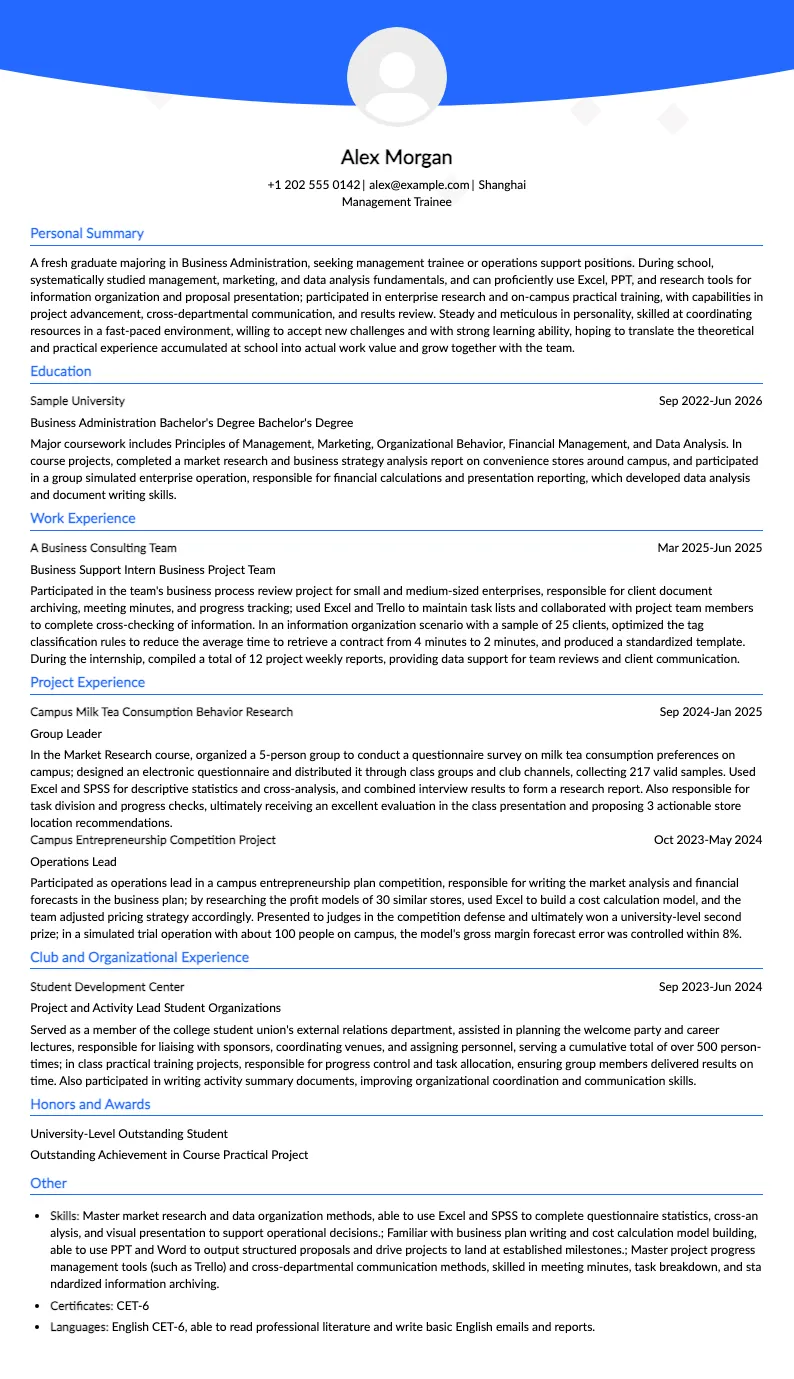
Use an original fictional example to organize engineering experience, projects and skills. Adapt the structure to your own work without copying invented achievements.
How to use this example
The candidate, employers and project details below are fictional teaching examples created for this guide. They illustrate how a resume can communicate scope and responsibility. Do not submit them as your own experience. Replace every example with facts you can explain and with links you are permitted to share.
A practical structure is contact details, a short relevant summary, experience, selected projects, skills and education. You can change the order. A recent graduate may put education or a strong project earlier; an experienced engineer may lead with recent work. Choose the order that makes your strongest relevant evidence easy to find.
Contact details and a focused summary
Use a name, professional email, location at a useful level of detail and relevant professional links. A code repository or portfolio helps when it contains work you can discuss and is safe to make public. Check each URL in an ordinary browser window. A private repository link without access is not useful evidence.
A summary is optional. If you include one, identify the kind of work you have done and the direction you are applying for. Avoid a long list of personality adjectives or seniority you cannot support. Do not publish sensitive identification numbers. Include additional personal details only when you decide they are relevant to the application.
Fictional summary:
Software engineer with experience maintaining backend services and testing account workflows. Interested in roles involving reliable APIs, clear documentation and collaborative product delivery.
Experience that distinguishes contribution from team scope
Within each role, show employer, title and dates consistently. Use a few bullets that cover different contributions. Describe the system or process briefly so the reader has context. When a result belonged to several teams, explain your part rather than claiming the entire result as an individual achievement.
Fictional experience entry:
Software Engineer — Example Studio — 2024–2026
• Implemented validation for profile updates and added regression cases for partial saves.
• Investigated recurring account recovery failures with support colleagues and documented the confirmed reproduction steps.
• Reviewed API response changes with the web team before a release to preserve existing integrations.
These bullets describe deliverables and collaboration without inventing revenue, traffic or performance measurements.
Projects should show a problem and a defensible choice
Choose projects that add evidence beyond the skills list. State whether the work was personal, academic, open source or paid. Explain what the project does, the part you built and a design decision you can defend. A smaller project with clear tradeoffs can be easier to discuss than a large copied tutorial.
For a portfolio API, useful evidence might include a permission boundary, a documented data model, tests for a failure mode or a decision about storage. If you have trustworthy measurements, explain their conditions. Otherwise, describe what was implemented and tested without presenting local experiments as production performance.
Fictional project entry:
Personal project: Reading List API
Built endpoints for saving and organizing reading notes. Added owner checks to prevent one account from modifying another account’s notes, and documented the error responses with request examples.
Only use a description like this if you completed and can explain the work.
Skills and education should support the rest of the resume
Group skills so a reader can scan them: languages, frameworks, data tools and delivery practices are common groupings. Include tools you can discuss in context. Avoid decorative proficiency bars that imply a measurement without explaining one. Remove a technology if your only evidence is that it appeared in the job description.
State completed education and credentials accurately. Make an unfinished program or expected completion date clear rather than implying completion. Add relevant coursework when it helps explain your background, especially early in your career. There is no need to add unrelated school ranking claims or country-specific recruiting labels.
Check the document as a reader would
Review the resume against one actual role, not an imaginary ideal employer. Verify each date, title and link. Export a PDF and inspect the page breaks, line wrapping and text selection. Keep important information in a readable order rather than relying on decorative elements to explain your experience.
This example provides a structure and editing questions. It is not a tested ATS score, an employer endorsement or a promise of hiring results. Use a layout that presents your evidence clearly, then revise the content to match your own background and the application instructions.